GoPro launched its Karma drone last year ahead of the Hero 5 Black. For a while, critics thought that the foldable Karma would give the Mavic Pro, another foldable drone from DJI of China, a run for its money.
Unfortunately, the GoPro Karma drone ran into a serious issue and the American camcorder company embarrassingly recalled the product from the market less than a month after its launch, reports Recode.
Apparently, there has been a serious malfunction issue on the Karma drone where it suddenly loses power and fall from the sky. It also posed an injury risk to either the user or bystanders especially if the drone suddenly falls from the sky and hit them from above.
While the reports were sporadic in nature, GoPro decided to take due diligence and prudence instead and had to bite the bullet of embarrassingly recalling its drone from the market while issuing customers, who already bought the device, a full refund.
The malfunction of the GoPro Karma drone was due to a basic battery retention issue, explained GoPro CEO Nick Woodman during the Consumer Electronic Show (CES) 2017 held early last month. He also assured consumers that the Karma drone will be relaunched this month.
Cost-cutting measures
In November last year, GoPro announced it was cutting about 200 jobs in an attempt to reduce its operating expenses following the delayed launching of the GoPro Karma and the Hero 5 Black for a full year.
The company also announced that time that Tony Bates, its president since June 2014, would step down by the end of 2016.
GoPro has not been very profitable over the last few years. Its shares lost half their value in 2016. But with the layoffs and restructuring, GoPro said it expects to reduce its operating expenses to $650 million this year and hopes to return to profitability.
It wants to start the year on a high note with the relaunching of the Karma drone this month. In fact, GoPro is now taking orders for the all-improved Karma drone.
It has also disclosed through an official press release that the problem of the drone when it was first launched last year had something to do with the faulty latch mechanism that sometimes caused the onboard battery to disconnect during flight.
GoPro says that it has come up with a new battery latch design that solves the problem.
Delayed for a year
The Karma is a foldable drone that can be tucked into an included backpack and costs $800 without a camera or $1,100 with a GoPro Hero 5 Black.
Some analysts believed that GoPro may have missed its chance to claim a substantial share of the market, let alone be a serious challenger to China’s DJI, the undisputed industry leader.
That is particularly true since the initial release of the Karma was delayed for about a year, and because the recall came not long after DJI launched its Mavic Pro, which was seen as a direct Karma competitor offering more features.
Frost & Sullivan drone analyst Michael Blades believes that it was kind of late for the GoPro Karma drone to make an impact on the market because the company already lost the opportunity to get into the market before it got saturated.
Blades also thinks it was a bold move for GoPro to recall the Karma drone when there was no legal requirement for the company to do so, and that he appreciates that the company seemed to have wanted to show its customers good faith by refunding their money and fixing the problem.
The analyst says it was a good PR move for the company but coming back and trying to relaunch now, expectations from consumers would not be as high as more than a year ago, during the time when it was supposed to launch, notes the Fast Company.
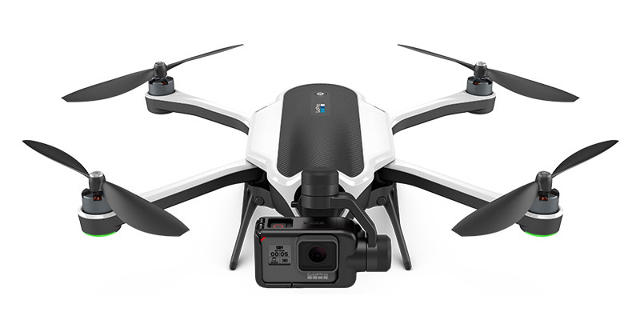
For its part, GoPro argued that the Karma, which comes with an image-stabilizing camera grip that can be held by hand or worn, and which it markets as ‘Hollywood in a backpack,’ capable of shooting professional-caliber photos and video, will do just fine on relaunch.
GoPro has a legacy in image capture and a passionate global user base, says a company official, adding that they are well-positioned to compete in the drone market with Karma, which is a versatile and complete capture solution for aerial, handheld, and wearable image stabilization.