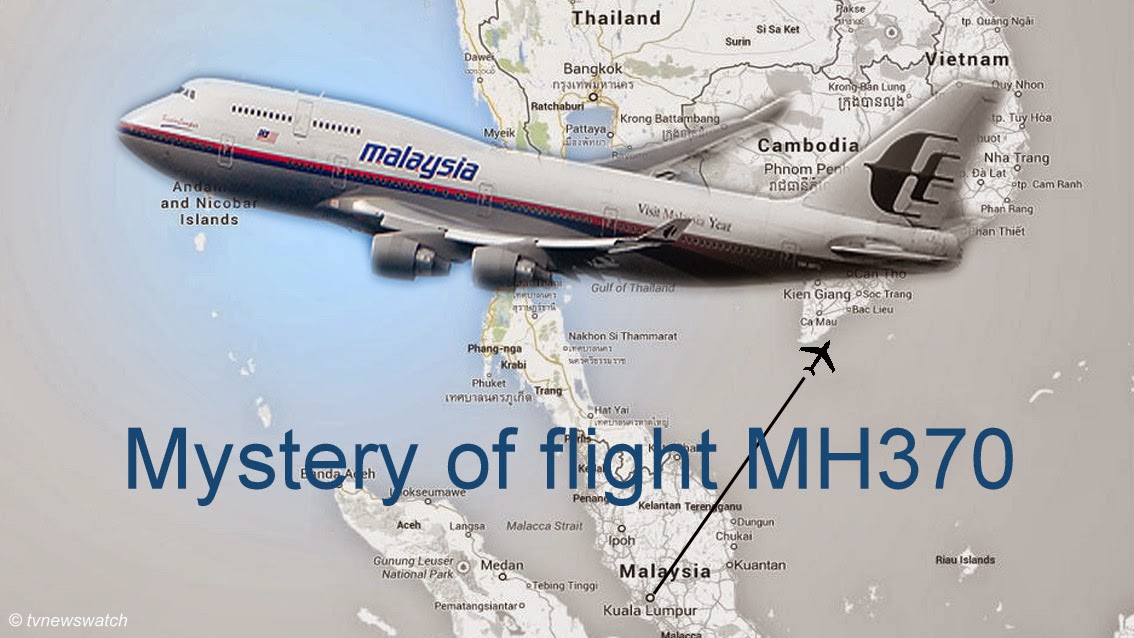
More than 20 months since the disappearance of the Malaysian Airlines Flight MH370 in March last year, the remains of the ill-fated plane has yet to be found.
While a wing part of the plane was already found a few months ago off the coast of Reunion Island in Africa, the full wreckage is still missing.
After witnessing the near futility of the efforts of the combined search teams of the governments of Australia, Malaysia, and China, in looking for the wreckage of the missing plane, the United Nations, in a conference held in Geneva, Switzerland on November 11, has agreed to use global satellite tracking for passenger airliners, notes Engadget.
The decision was arrived at to dedicate part of the radio spectrum to a global flight trafficking system to improve the current plane tracking method, which relies heavily on ground-based radars.
Representatives from more than 160 countries decided to set aside a radio frequency for the satellite tracking of planes at the World Radiocommunication Conference (WRC), organized by the UN’s International Telecommunication Union (ITU), reports BBC.
Specific frequencies to monitor planes
Under the UN agreement, countries can use specific radio frequencies to monitor planes via satellites rather than solely relying on radar-driven technology on the ground.
The UN’s aviation arm, the International Civil Aviation Organization (ICAO), has set a November 2016 deadline for participating countries to adopt the new flight tracking guidelines. The guidelines will include aircraft sending their positions at least every 15 minutes, or more in cases of emergency.
Houlin Zhao, ITU Secretary-General, said the agency had responded swiftly to the expectations of the global community on the major issue concerning global flight trafficking and monitoring.
The UN deal shall enable satellites to receive transmissions, known as automatic dependent surveillance – broadcast (ADS-B), to track airplane movements. It will also help the UN and other aviation bodies to keep an eye on 70% of the world’s airspace, which ground-based radar systems cannot cover.
No aircraft debris field
Meanwhile, the Australian Transport Safety Bureau (ATSB), which is leading the hunt for the missing plane, ruled out the recent observation of the American geophysical firm Williamson & Associates claiming that there were objects in an area in the Indian Ocean that resemble an aircraft debris field.
ATSB said that those are just edges of rocks exposed above the seabed and associated scattered rock.
But Rob McCallum, manager of special projects at Williamson & Associates, said that the formation on the images do not appear to be geology that it should be worth another look by the search team.
McCallum said that the team should consider doing it if only for the sake of the families of the victims of the ill-fated Malaysian Airlines Flight MH370.
The analysts in the geophysical firm noted that the edges of the pictures are blurry which means that sonar equipment was being pushed to the limits and the search team might be missing something.
However, ATSB feels that the firm is just sour-graping as it lost out on a tender position with the government body for the search for Flight MH370, despite putting its credentials on the table saying that it specializes in sonar equipment.
In fact, the firm was able to find an Australian warship in 2008, some 60 years after it sank at the bottom of the Indian Ocean.
For its part, the ATSB said that its own specialists are quite sure that the images did not show any aircraft debris. A spokesman of the board said that what some of the analysts of Williamson & Associates did was unprofessional because they drew conclusions based on the limited information provided by the images in the search update report.
The spokesman added that there are no indications that there is anything possessing the characteristics of an aircraft debris field and, therefore, a visual imaging run at very low altitude was necessary.