While Apple is still on the drawing board for the development of a possible self-driving car five years down the road, Swedish carmaker Volvo appears to be already on the threshold of autonomous driving, according to PC.
Self-driving car technology was first showcased by Google in 2010 anchored primarily on multiple view camera and sensors which are guided nonetheless by a human. Car makers have yet to come up with a truly self-driving car that does not require any human intervention at all.
On February 19, Volvo announced that it will provide self-driving cars to 100 of its customers in Gothenburg, Sweden sometime in 2017 so that they can test the vehicles on public roads without having to do anything even when sitting on the driver’s seat.
Peter Mertens, senior vice president of research and development at Volvo says that the company is already nearing breakthrough in autonomous driving and will soon be making available the public pilot project that they are currently working on.
Drive Me project
The 100 Volvo self-driving cars is part of the carmaker’s “Drive Me” project which seeks to test self-driving technology to the fullest on Swedish public roads.
The vehicles will be equipped with a network of sensors, cloud-based positioning systems and 28 intelligent braking and steering technologies.
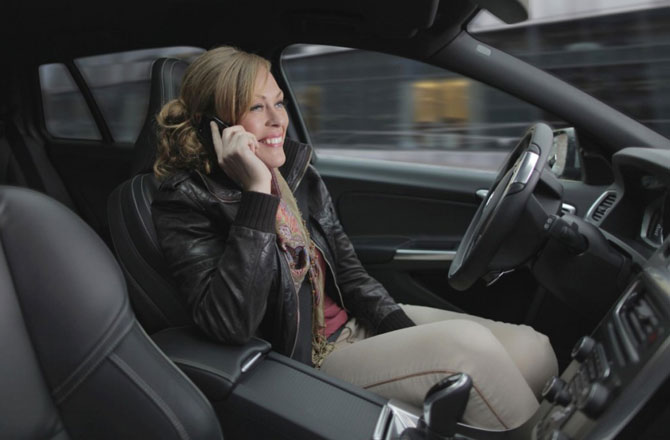
Once the car is switched to Autopilot mode, it will drive on its own and leave its passengers doing what they prefer to do as they prepare for their day at work.
Just like an airplane, there is also an option for active driving, giving the control back to the driver, which according to Mertens is an opportunity to transform lost time on the road to quality time doing things for work or even pleasure.
More work to be done
According to Erik Coelingh, Volvo technical specialist, there is still work to be done on the self-driving technology, saying that it is easy to build and demonstrate a self-driving concept vehicle. The challenge according to him is to design and produce a complete system that will be safe, robust, and affordable for customers.
Coelingh said they’re still working to get the car to respond to real-world driving scenarios like pedestrians, other vehicles, and other things that can be seen on the road.
Volvo will be testing the self-driving car on roads that do not have heavy traffic, less pedestrians and cyclists to ensure that no harm will befall on anybody in the event of a malfunction or emergency.
The Swedish carmaker also revealed that the car shall also have a back-up system for insurance purposes in the unlikely event of a brake failure.
Coelingh said that they cannot settle for 99% safety, reliability and dependability of the self-driving cars but 100% as much as possible because it will mix with real-life traffic eventually.
In the event of a technical failure, bad weather or end of journey, Coelingh said that the driver can simply take over control. But if the driver is incapacitated to drive like sleeping or drunk, the car will just pull over in a safe place.